Showing posts with label movies. Show all posts

Wednesday, May 7, 2014

Movie Review: The Grand Budapest Hotel:

My favorite thing about Wes Anderson movies is that he keeps the camera very steady. I'm so tired of seeing movies with shaky-cam and fast editing that I now actually judge films on whether or not they can keep the camera still.

The BF and I went to see "The Grand Budapest Hotel" recently, which thrilled me almost immediately because there was a funicular railway in the beginning. I ADORE funicular railways! My mum and I went on one in Prague that we still remember fondly.

This one! A funicular railway is all slanty.

We got there just as one train was leaving, so we had to kill time in this enormous wine bar where we were the only customers. The proprietor told us how he would climb onto the roof to throw all the empty wine bottles down the chimney. Why? So they'd make an attractive pile in the bar's unused fireplace, of course.

Surprisingly difficult to find a picture of a pile of wine bottles in a fireplace. He was a true pioneer of design.
After drinking, we got on the funicular railway and rode it to the top of a hill, where we found an art gallery in a beautiful house overlooking the Vlatava River. We have obviously just missed a party, because there were empty cups and chip bowls full of crumbs everywhere. The only person there was the artist, this tall, skinny man with thick black-rimmed glasses and a big gray beard down to his belt. He invited us to look around his art gallery/house, which, upon inspection, was chock full of misty, psychedelic paintings of elves and fairies. Mum whispered, "He must've gotten laid a lot in the seventies."

We think a lot about that artist, my mother and me. He lived through the Communist regime and the Velvet Revolution. He came out of the war and the horror and the occupation with his pretty little house on the hill where all his friends come to view his pretty paintings of mythical beings. He's living the dream after living the nightmare. It's a beautiful thing.

I think this is the theme Wes Anderson is exploring in "Grand Budapest." On the one hand, it's about the rise of fascism in Eastern Europe, but on the other hand, what it's REALLY about is the pretty little hotel on the hill where all the main characters' friends come to visit, and yes, there's even some pretty paintings involved.

I'm not a die-hard Anderson fan--I didn't like "The Life Aquatic," and living in the midst of hipster Brooklyn has unfortunately soured the twee delights of "The Royal Tenenbaums" for me. But "Grand Budapest" resonates. There's something profoundly dignified, profoundly humane, in the thought of people maintaining small circles of beauty and peace in the face of wretchedness and horror.


I want to see more movies about that.

Sunday, May 5, 2013

Movie Review: Iron Man Three

Summer movie season has started with the latest phase of Marvel Entertainment's grand master plan to just make all the movies and all the money ever. "Iron Man Three" (yes, that's the title they show in the movie credits, they popped a "Three" in there) opened yesterday, and I went to see it right away because I am a massive nerd.
Why is it 3 on the poster but Three in the movie? Don't they proofread these things?
This movie has a lot riding on it. The Marvel Entertainment juggernaut hit peak cultural saturation with "The Avengers" last summer, which was the culmination of Phase I of their Marvel movie universe. "Iron Man Three" kicks off Phase II, and as the first of the post-Avengers movies, there's got to be tremendous pressure for this movie to do well so it doesn't fuck things up for the four or five other sequels barreling down the road after it.

The fact that "Iron Man Three" has these high corporate expectations placed on it, but still manages to find its own unique voice and its own story to tell, bodes well for the future of the franchise. This is a good movie

Before I can discuss this movie on its own merits, though, I have to judge it on its existence as a sequel and put it in its place in the Marvel movie universe. That's both the blessing and the curse of the interconnected movie universe, because while it's great to experience the episodic nature of comic books on the big screen, it's difficult to experience each individual installment as a work of art when you're busy comparing the movie to its predecessors. I'll keep it simple. "Iron Man Three" is much better than "Iron Man 2," but not quite as good as "Iron Man" and "The Avengers." So the sum equals good but not great, and let's discuss why.

SPOILERS AHEAD!

This movie missed being truly great because it had lousy action scenes. Director Shane Black is wonderful at dialogue, character development, and storytelling, but unfortunately, he's not so hot at action, which is a problem in a movie like this. There's one decent action scene, where Iron Man has to catch fourteen people who just fell out of a plane, but the rest of the action sequences fall into the trap of too-dark, too-fast, and too-blurry. The climactic battle scene of "Iron Man Three" is just a mess. There's this big reveal where all forty or so of Tony's Iron Man suits appear in the air to battle the bad guy's super-powered henchmen, and it's meant to be so cool that all the different suits with their different appearances and powers show up to save the day--but the whole thing is shot at night on a pitch-black wharf, so all the audience ever sees of these awesome suits are their glowy lights and the occasional close-up of them before they blow up, melt, or get crushed. Why have a big reveal where you can't bloody see anything?!

It's weird that the sloppy actions scenes bug me so much, because I don't actually like action in movies. The action scenes are good times for me to get up to use the bathroom or wash the dishes. I make jokes a lot about how if a movie doesn't have 'splosions, I'm probably not going to like it, but I mostly use that rubric to avoid watching boring movies where people look at themselves in mirrors and sigh a lot.
I will never watch this.
The truth is that I like superhero movies and sci-fi movies for the story that happens between 'splosions. Like the man who reads "Playboy" for the articles, I watch "Iron Man" movies for the character development. And in that way, "Iron Man Three" is the perfect movie for me, because the action scenes are so poor and forgettable that I literally can just walk away during them and come back for the stuff between the action, which is everything I want to see in a superhero movie and an indication of good things to come from the Phase II movies.

I said earlier that this movie wasn't as good as the first "Iron Man," but I think that's because very little can top the first forty-five minutes of the original, where Tony Stark is captured by terrorists and has to build his first crude Iron Man suit in a cave while his heart is powered by a car battery. I get goosebumps thinking of the look on Tony's face when his captors remove the burlap sack from his head so they can film him for their ransom video. It's such a realistic and moving scene, dirty, terrifying, and devoid of ordinary comic book bombast and sparkle. The second half of "Iron Man," once the corporate espionage plot line took off, wasn't actually that great, but I still regard "Iron Man" as the best of the trilogy because of the strength of its first half. "Iron Man Three" doesn't have anything that quite matches the raw emotional power of the cave scenes in "Iron Man," but overall it's more consistent in both quality and tone than either of its predecessors.

The story in "Iron Man Three" is drum tight. Shane Black last worked with Tony Stark actor Robert Downey Jr. on the film noir homage "Kiss Kiss Bang Bang," a great movie with so much plot packed in that I had to watch it twice to figure out what the hell was going on. There was a lot of story packed in to "Iron Man Three" as well, but unlike "The Dark Knight Rises," the plot never felt crowded to the point of incoherence. In fact, "Iron Man Three" is basically "The Dark Knight Rises" without any of its flaws. It's a complex story that made sense instead of imploding under the weight of its own plot holes; it has villains with schemes that will actually bring them money and power instead of basically being a "nyah-nyah, you suck!" taunt at the hero; and it stars a hero brought low by his past demons who is still actually heroic instead of lurking around his mansion working on his brood-beard.

I used to think you were cool.
"Iron Man Three" is a smarter and more complex movie than most superhero movies in the Marvel crop, closer in plot and thematic elements to cerebral sci-fi flicks like "Inception," "Blade Runner" and "Minority Report." There are mysteries to solve, double-crosses, and layers within layers that unfold so subtly under the glossy veneer of the summer blockbuster imperative that I didn't realize until I left the theater just how smart this movie really is. Tony Stark may be the "genius billionaire playboy philanthropist," but this is the first time since the original "Iron Man" that we actually get to see him live up to the genius part. He solves mysteries, infiltrates enemy strongholds, and builds amazing weapons from Christmas ornaments and materials he finds in a hardware store.

Black made the good decision to state the theme of the movie outright, and then hang most of the story and character motivations on it. He didn't pick a very complicated theme--the road to hell is paved with good intentions--but it's a solid one on which to build an Iron Man movie because Tony Stark is a genius and therefore vulnerable to hubris. Iron Man has always been a hero with Frankenstein undertones, with a sort of "what-has-my-science-wroth!" angle driving many of his adventures. The characters in Iron Man's world are capable of many feats of scientific ingenuity, but frequently forget to ask "should we" in their rush to answer "can we." They create monsters because they fall short of creating miracles, leaving themselves open to exploitation and manipulation by villains who are only interested in the monsters.

Stark isn't above such manipulation, although he likes to imagine that he is. The first two movies saw Stark reject a violent legacy and embrace his identity as a hero, placing himself above those who would twist his technology into something monstrous. He surrounded himself with good people he could trust, giving his technology to the only person in the military he could trust to use it for good and justice, Colonel Rhodes; and carefully picking a Stark Industries CEO replacement, Pepper Potts, who would instantly recognize and reject projects and individuals that might go against his new heroic philosophy, as we see at the beginning of "Iron Man Three" when she refuses to invest in Aldrich Killian's A.I.M. research because it would be too easily weaponized.

But his good intentions go awry because he forgets to account for the human factor: himself. "Iron Man Three" takes the events of "The Avengers" to their logical conclusion and shows us an Iron Man who literally crossed over to the other side and thought he was dead. Now, having not died but lived, he struggles with insomnia, nightmares, and crippling anxiety attacks, unable to come back from that one, terrifying moment when his display screens flickered out in the deepest reaches of space, on the other side of a wormhole that had just unleashed an alien army on his world. He's burdened with the knowledge of his own mortality, and struggles to reconcile his identity as a mighty hero with the realization that despite all his strength and armor, he can still die. There is a powerful moment in "Iron Man Three" where Tony drags his useless, broken Iron Man suit through a snowy forest, a striking image of the fallible man weighted down by the burden of his heroism.

Despite all this, "Iron Man Three" manages to avoid falling into the trap of the superhero angst machine. Tony may be unraveling, but he's still Tony Fuckin Stark--the charm, the snark, the narcissism--and the movie finds a good balance between the heavy stuff and the funny stuff. There's the usual sparring with his girlfriend Pepper and his best friend Rhodey, always welcome, especially in the hands of a director with a flare for memorable dialogue. And there are also some wonderful encounters with various members of the adoring public as Tony journeys across the country. I think this may be the first superhero movie that actually handles the issue of superhero public relations realistically and well, showing us encounters between the hero and his fans that ring delightfully true to anyone who has ever been to a Comic-Con.
It's--it's you! Oh man, I have all your work, you're like, an inspiration!
Overall, I'm very pleased with "Iron Man Three." It's not "The Avengers" or "The Dark Knight" (as the BF says, what is?), but it's fun, well-acted, and aside from some bad action scenes, well-made. Most importantly, it''s not afraid to be smart and play with expectations of what superhero movies should be. Much like how "Captain America" was a World War II movie with superheroes, "Iron Man Three" is a superhero movie with a bit of the romantic comedy and the buddy-cop genre mixed in with some espionage and political thriller. I can only hope that the next batch of Marvel movies charging their way into theaters are at least as good as this one.

Stray thoughts (and another SPOILER ALERT):

-I loved the reveal at the end of the credits, that this movie was a story that Tony was trying to tell to Bruce Banner (the Hulk), and Bruce had just slept through the whole thing because he was so bored by it. I'm a little disappointed we didn't get an end-credit tease of one of the other Marvel universe movies, but I think this way was better because it built on the wonderful bro-scientist friendship Bruce and Tony had in "The Avengers."

-Ben Kingsley knocked it out of the park as "The Mandarin." Not to compare "Iron Man Three" to another Batman movie, but it basically took the R'as al Ghul twist from "Batman Begins" and made it way better because Kingsley played it for laughs and poor Tony just looked so confused.

-Nitpicking fan-girl time! So at the end of this movie, Tony destroys all his Iron Man suits, fine; and he fixed Pepper so she's no longer on fine, that's fine too; and then he gets the shrapnel removed from his heart so he doesn't need the arc reactor in his chest anymore. Wait, what? Wasn't the whole plot of "Iron Man 2" that the metal in his arc reactor was killing him? And that it was a catch-22 because he couldn't live without the arc reactor in his chest keeping the shrapnel away from his heart, but he couldn't keep the arc reactor in his chest because it was poisoning him? If he could just get the shrapnel removed the old-fashioned way, with doctors and surgery, why did he go through all the trouble of making a new, safer element to put in his arc reactor in "Iron Man 2"? In fact, why didn't he just get it removed in the first "Iron Man" if such a thing was possible?

-Another nitpicky fan-girl moment: so the Extremis formula makes people regrow lost limbs. Where does the extra mass to make those limbs come from? In the movie, limbs just seem to regenerate from the host body, but where is the new limb getting its matter? Scientifically speaking, those A.I.M. henchmen should be cramming food into their mouths constantly in order to have enough mass and energy to regenerate limbs. This is the same thing that bugs me about the Incredible Hulk, who is much more massive and apparently denser than Bruce Banner, but where does the extra mass come from?!

I leave you with a comic that addresses my feelings about the mass issue.
From the amazing webcomic, "American Captain."

Wednesday, March 27, 2013

A Trip to the Movies

On my last post on Big Island Rachel's Books, I reviewed a long essay by James Baldwin called "The Devil Finds Work," which is about the portrayal of blackness in American movies. To quote myself:

"I'm not what you'd call a film buff. Movies unsettle me for their ability to deliver a huge emotional wallop in a relatively short amount of time. I prefer novels, which give me space and time to inhabit the characters' worlds and absorb their struggles; or television episodes, for the the same reason."

Today I'm going to explore this a little bit more, because the truth is, I love movies but I'm also scared of them, which is a weird way to be. I'm not scared of movies themselves, but of the experience of watching movies, especially in a theater. Film is an incredibly powerful medium. Books are, too, but the reader has a great deal of control over the experience. I can pick up the book when I want to, put it down when it gets too much for me, read as fast or as slow as I like, and basically experience the book on my own terms.

Movie-goers do not have control over the experience of watching a movie. I'm stuck in a dark room in a state of sensory deprivation and the movie has complete control over me--not just what I see and hear, but also how I perceive the events on the screen. The movie controls not just my senses, but my thought processes, hijacking my consciousness and forcing me not just to see, but to see how the movie wants me to see. I can argue against the movie's viewpoint after the fact, but while it's happening, I have to accept the world the movie presents and the morality of that world.

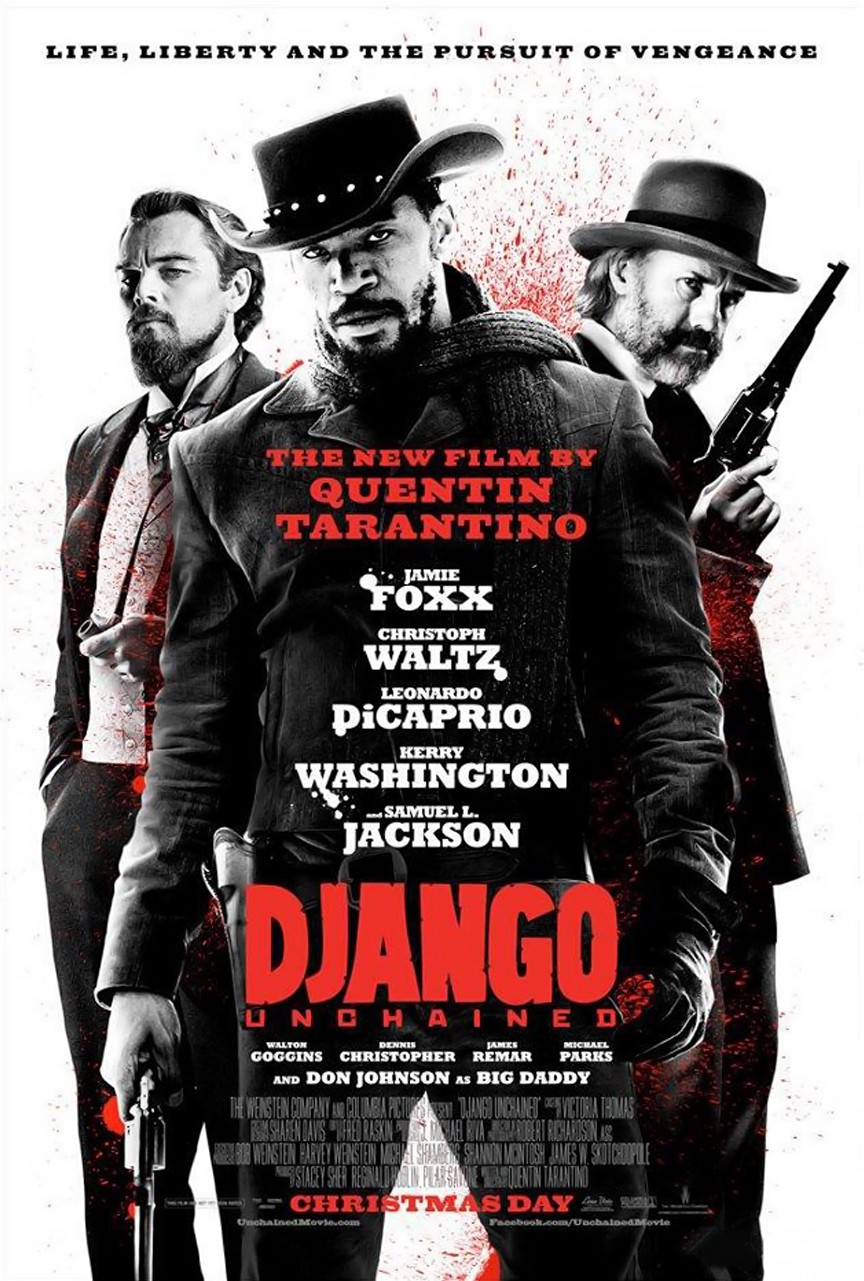
As an example, let's look at "Django Unchained," the last movie I reviewed. I took "Django Unchained" to task for having problems with tone, specifically the way it portrayed events that were horrific in content but lacked an correspondingly serious tone. My visceral reaction on seeing many of the scenes in this movie was to be horrified at the awful ways humans can treat one another; but the movie commanded me to feel a different range of emotions than the ones I was naturally inclined to feel. I think I was supposed to feel anger, humor, intrigue, satisfaction in vengeance--a range of emotions that was a tad inappropriate and simply not what I wanted to make of the material.

"Make it cool" is not an acceptable answer to the question "What's your take on slavery, Mr. Tarantino?"
The way I felt about what I was seeing struggled against how the movie wanted me to feel, and I ended up having to leave the theater for a bit and go sit in the bathroom to preserve my sense of agency. It was frustrating because I knew I was missing out on key plot points, and unlike a book, I couldn't just put a bookmark on a scene and come back when I had collected and organized my reactions.

On a related note, people who watch movies with me in the comfort of a living room or bedroom now know why I so frequently hit pause and get up to make tea, or read a book, or surf the web on my tablet. Agency. I preserve it.

I reiterate: I know this is a very weird way to feel about movies, and I'm not trying to make an argument against the medium because I'm not Holden Caufield in "Catcher in the Rye" (obscure literary reference for the win!). It's just that being in a movie theater sometimes makes me feel like Esther in "The Bell Jar," watching a terrible technicolor movie one evening in New York City and suddenly being able to guess the entire plot and ending, and hating how trite and contrived it all was while simultaneously being completely overwhelmed by it (second obscure literary reference for the win!).
I just leveled up in the Literati Scouts.

If you're a regular reader of my blog, you're probably wondering how all this fits in with the fact that I saw "The Avengers" in a theater six times last summer.

I can feel you judging me.
In the case of "The Avengers," and the "Indiana Jones" franchise, and most Batman movies, and "Lord of the Rings," and any of the other fantasy/scifi movies that I love, I think the short answer is 'splosions. The long answer is scale. I don't mind being overwhelmed by movies that are about grandiose and unlikely things. I don't mean to say that I want stupid movies or movies about uninteresting and predictable characters. The older I get, the less patience I have for stupid bullshit, and fortunately the type of movies I like have followed me to maturity--my friend R and I talked for over an hour about the family relationships in "Thor" alone.

The further removed the movie is from my own life, frankly, the more I enjoy it. I guess the truth of the matter is that I like escapist movies. (Why I like the escape into superhero fantasies instead of action movies or romantic comedies where every man is a handsome architect and loves the soulful heroine just the way she is while completely submitting to her efforts to change him, well, that's a topic for another post.) I know I'm not alone in using movies to escape to better, more interesting worlds.
When they get out of their rocket, do they have to walk through puddles of moon-eye goo?
Escapism is what the most profitable wing of movie industry is based on. Most people spend their money on movies that get them outside of themselves and take them to other, more interesting worlds: fantasy kingdoms, spaceships, bygone eras, battlefields, and perfect worlds where everything happens for a reason and all your problems are solved by the end.

But then there are the other movies, the ones that challenge and discomfort and implicate. I want to like them. I want to say I enjoy a movie that makes me cry or cringe, that requires me to work at understanding it on its own terms, because I am both a deep, thoughtful person and an incredibly shallow person who wants others to think she's deep and thoughtful.

And yet, there I am in a bathroom at Cobble Hill Cinemas, hiding from the sight of Leonardo DiCaprio sawing a human skull in half, and wishing I was in the theater next door that was screening "The Hobbit" because I can hear the dwarves singing through the walls and it comforts me deeply.

Sunday, January 27, 2013

Movie Review: "Django Unchained"

Update on the heating situation: the heat came back on late Thursday night, as though the Internet read my cold and angry blog post and made magic things happen. One new tactic I learned for dealing with the no-heat situation though, is to boil water. My Tall Boss advised me to put a big pot of water to boil on the stove, said it would turn the place into "the lizard house" (which I really hope was just a reference to the climate reptiles need to survive, and not something I need to speak with my union rep about). And while the range on that heating technique wasn't fabulous, the area of the apartment around the stove did get quite toasty, if a bit moist. I put my bonsai there to perk it up.

That's all taken care of, so let's have a movie review!

I've seen "Django Unchained" twice now. It's good, let's start with that. It's very cool and entertaining, and it gives one an enormous sense of satisfaction to watch Jamie Foxx kill dozens of racists. But being cool is really all this movie has going for it, lacking the meta-texual commentary on the influence of movies on history that made Quentin Tarantino's previous historical fiction effort, "Inglourious Basterds," such a triumph.

I'm thinking it may have something to do with the subject matter. Tarantino is at his best when he's paying homage to various genres and sub-genres of movies. He's an aficionado of pop-culture, and he has a unique talent for turning conventions and tropes on their head and making them feel fresh and original. The BF likes to say that Tarantino is fluent in the language of film, "but keeps coming up with new shit" to say (that's how he talks before morning coffee). The problem with "Django Unchained" is he really doesn't have a lot to work with--Tarantino, I mean, not the BF. Much of this movie plays like a spaghetti Western, which is, again, entertaining, but also really highlights just how lacking cinema is when it comes to the depiction of slavery in America.

The portrayal of slavery in films and television has been--not sparse, exactly, but compared to the amount of material Tarantino was able to draw on for, say, his heist movie ("Reservoir Dogs") or his World War II movie ("Inglourious Basterds"), his slavery movie is drawing from a much smaller pool. There was "Roots" in 1977, "A Woman Called Moses" in 1978, "Glory" in 1989, "Amistad" in 1997, and "The Boondocks"  did an episode called "The Story of Catcher Freeman" in their second season, which I throw on this list because "Django Unchained" feels more stylistically similar to that cartoon than the others. (Maybe you could throw "Gone With the Wind"in  there, considering that it is the definitive work of art on the antebellum South, but it's only about slavery if you're doing an analysis of  the evolution of African-American stereotypes in movies.)

An interesting side note of this train of thought: the lack of movies about slavery stands in sharp contrast to the amount of movies made about racism in America (in general) and the civil rights movement (in particular). "To Kill a Mockingbird" in 1962, "Guess Who's Coming to Dinner?" in 1967, "Blazing Saddles" in 1974, "King" in 1978, "Do the Right Thing" in 1989, "Malcolm X" in 1992, "Get on the Bus" in 1996, "The Great Debaters" in 2007, "The Help" in 2011. There was even a trailer for a new Jackie Robinson bio-pic before my second viewing of "Django Unchained."

This makes one ask oneself, Self, are filmmakers and audiences more accepting of willing to explore slavery's aftermath and legacy than slavery itself? Why?

It's weird, because I remember reading many, many works of fiction as a child written from the perspective of slaves. One of the American Girl series was about a slave, as were several Newbery books. These were considered age-appropriate and curriculum-approved, assigned to me by teachers who led class discussions on the topic. And I attended public school, so this was state- and federal-sanctioned material, given to fourth- and fifth-graders. We're okay with children encountering slavery in America through fiction. Why aren't we okay with adults encountering it through film? I don't know enough about the history of film to say anything conclusive about the situation. I just wanted to air some suspicions I've been developing since I started researching the other movies I referenced in this review.

Speaking of which, let's get back to the review of "Django Unchained." As I said, this movie owes a lot to spaghetti westerns. The BF pulled up the opening credits of Sergio Leone's "For a Few Dollars More" (1965).


Unfortunately, I don't have a video of the "Django Unchained" opening credits to put up here so you can compare them, but if you've seen the movie or are planning to see it, you'll get the homage to "For a Few Dollars More" right away. The music, the imagery and the font on the credits bear striking similarities.

But even though many parts of it, like the opening credits, feel so familiar and well-trodden in terms of film-making, "Django Unchained" still feels like its own, wholly original work of art. Tarantino may borrow extensively from the imagery, music and plot elements of other movies, but the familiarity of his tropes is actually what makes his movies feel fresh and new and unexpected (that, and the fact he's completely willing to kill off main characters seemingly on a whim).

That said, "Django Unchained" is not one of his best works. As far as revenge fantasies go, "Kill Bill" was more exciting and visually stimulating; and as far as historical fiction goes, "Inglourious Basterds" had more depth. The problem with this movie--besides the dearth of movies about slavery draw on, as I mentioned above--is that the subject matter isn't entirely suited to the Tarantino treatment. All those musical stings and that snappy dialog clashes with the visuals of slavery: the whippings, the chains, the branding irons, the dogs, no amount of ironic detachment can make that stuff "cool." And the more realistically the movie portrays slavery, the more horrific Tarantino's attempts to make it "cool" feel to the viewer.

Tarantino is actually pretty good at gore, and normally he knows when the audience needs video game violence ("Kill Bill: Volume 1" restaurant massacre, with the geysers of blood spraying from severed limbs) and when the audience needs real violence (Mr. Orange's gut wound in "Reservoir Dogs"). But he didn't do so well with the violence in "Django Unchained." I'm thinking specifically about a scene where a runaway slave is torn apart by dogs. There's other stuff happening in that scene: there's a hunchback who mumbles with such a thick Southern accent you can't understand him, which is meant to be funny; there's a woman dressed in men's clothing, a red scarf covering her from the eyes down, who is meant to be one of Tarantino's intriguing female badasses; but none of it makes a damn bit of difference because a powerless man is being torn apart by dogs for the amusement of slavers. The tone of the scene is at such odds with the context, and when your context is this bleak, you have to watch your tone much more carefully than Tarantino did in this and a few other scenes in "Django Unchained."

That's not to say this movie fails entirely as a revenge fantasy or even a completely un-subtle exploration of racism in America. I had hopes early on the movie that Tarantino was going to take "The Producers" route and make a full-on satire of "Gone With The Wind" or "Song Of The South," movies that idealize the antebellum south and play down the horrors of slavery.

Mel Brooks's stated purpose in life is to get revenge on Hitler for the Holocaust by making him look ridiculous, which is why we have "Springtime for Hitler" and "Hitler on Ice" (and are a richer world for them). There's a scene in "Django Unchained" where Tarantino does just that, but with slavers instead of Hitler.

Django and his partner are camped out in a hollow and a bunch of Ku Klux Klansmen ride in on horses to kill them. It's a very striking, grand scene: Wagner thunders on the soundtrack, white-hooded men sweep over the hill on white horses, waving torches and yelling, and it almost makes your heart swell like its the charge of the fucking Rohirrim in "Lord of the Rings: Return of the King." But then--oh, then, boys and girls--the Wagner cuts out, the movie jumps back about ten minutes in time, and all of the men about to go on the raid have an argument about how they can't see out of the eye-holes of their masks. And it is glorious. All those horrible human beings, perpetrating their heinous agenda because they visualize themselves as Nordic heroes of old, made objects of ridicule by their own jackassery.

Oh, and it felt good. 

If only there were more of that in this movie. But alas, there is not. It's the first and last time Tarantino tapped his inner Mel Brooks for "Django Unchained," because Tarantino doesn't really do satire. He dealt with the discomfort and horror surrounding slavery by having a former slave kill a bunch of slavers. While that was, as I said at the beginning of this review, enormously satisfying, I liked the raid scene better than any other scene in this movie because it struck the right tone and inspired the right feelings in me. How do you break power of evil people hold over your mind and spirit? You laugh at them. You turn Hitler into a figure-skater and Klansmen into bumbling idiots who can't see out their eye holes. It worked in "Blazing Saddles" thirty years ago, and it could have worked in "Django Unchained" if Tarantino was a very different kind of film-maker.

He's not. What we got is a pretty good movie with a lot of flaws--and the all-time record for number of times the n-word was spoken in a single movie (109).

Final grade: C. It would have been a B, but if you read my book reviews, you know I deduct a letter grade for racism, and breaking the record for use of the n-word is simply not something to be proud of.

Tuesday, January 1, 2013

Movie Review: "The Hobbit: An Unexpected Journey" Part 2 and three things you might like

I think sometimes how nice it must be for ordinary people. People who can watch television without becoming so fixated on a particular show that they stay up until two in the morning watching every episode they can get their hands on, and then researching it until sunrise on Wikipedia and TVTropes.com when the episodes run out; people who don't find themselves crying on the subway because of the ending of a book they finished a week ago; people who aren't elated or depressed for days because of how much they liked a movie adaptation of a property they enjoyed in the past.

I don't know what it's like not to live so deeply in my imagination, to not feel my breath get short and my blood pressure rise, to not be physically affected by the stories and fantasy worlds created by others. I wonder sometimes why I care so much about these things, why it matters a jot to me or anyone else if DC Comics re-boots their universe, or why I feel the need to write 2000 words on what I thought about "The Hobbit" and then come back to write another 2000 words on the same subject.
I wish I could quit you. Not really. I don't know what I'm saying!
 On the other hand,  it's people like me who end up creating these kinds of things. Peter Jackson didn't spend years of his life and destroy his health (seriously, look at pictures of him at the Oscars ceremony when he won all the awards for "Return of the King," he looked like the Goblin King, it was shocking) making movie adaptations of his favorite books because he wanted the pay day. He did it because he loved them. He's a fanboy, a literal fanatic about Tolkien's creation, and these movies are all good because he cares about things that ordinary people dismiss as trivial, unimportant, or too dorky to think about.

So I don't feel too bad about my obsessions. I'm in good company.

I said in my previous review that everywhere "The Hobbit: An Unexpected Journey" deviated from the source material, either to make the movie more exciting or to make it match up more with LOTR, it didn't succeed. The flip side of that is that everywhere the movie stuck to the book, it came off beautifully. I can't emphasis enough that if you grew up with this book, read it at night with your parents, or play-acted it in the backyard with your friends, your heart is just going to soar when you see about half of this movie.

Again, let's put the big damn SPOILER ALERT here for both the movie and the book.

1) The acting is superb. I'm a big fan of the BBC "Sherlock" television show, so when I saw that Dr. Watson was going to be Bilbo Baggins, I was very pleased. Martin Freeman is perfectly suited for playing humble, somewhat flustered characters that have an underlying toughness and resourcefulness to them, and he shines as Bilbo. I can't say enough good things about him, so I'll leave it at that.

In fact, everyone is wonderfully cast. Jackson changed some fundamental aspects of Thorin Oakenshield's character, and I don't agree with those changes, but I can't argue that Richard Armitage is excellent in the role as it's written. And while most of the dwarves kind of blend together, variety of hats and facial hair notwithstanding, the movie uses that to its advantage by portraying them as a perfectly synchronized eating, singing, fighting machine. There's no pressure to recognize more than three or four of the dwarves on sight; we're encourage to think of them as a single unit because they're stand-ins for an entire displaced dwarf nation.

2) Jackson introduces a thematic element of an entire displaced dwarf nation that wasn't really in the book, but unlike his other additions, this one is both needed and welcomed. I loved the the prologue of the movie showing the dwarves driven out of the Lonely Mountain by the dragon Smaug, because that opens the doors for Bilbo to be motivated by more than just a desire for adventure, as he is in the book. He sticks with the dwarves to help them gain back their home, which is exactly what he longs for pretty much as soon as he leaves the Shire. Adventure is well and good, but compassion and empathy make for much better character interactions, and I'm glad Jackson emphasized that aspect of the story.

3) It's funny! My friend R said that she always liked "The Hobbit" book better than the LOTR books as a child because "The Hobbit" was witty and made her laugh. Tolkien got a lot of comedy mileage by contrasting the dignity and somewhat-faux-heroism of the dwarves with the fussiness and practicality of Bilbo. In some places it seems like the dwarves are characters from the old Scandinavian sagas and Bilbo is a modern Englishman, as though Tolkien is mixing and matching entirely different genres of storytelling and getting humor from their differences.

Although I wouldn't call this movie a comedy, a lot of the humor from the book made it onscreen, mostly thanks to Freeman's Bilbo, who is, again, just a delight. One of the funniest moments for me was when they're all riding through a rainstorm, the dwarves are bitching about the weather, and Bilbo just slouches silently along on his little pony while everything about his posture and his expression screams, "I-hate-it-I-hate-it-I-hate-it." It makes me smile every time I think about it.

Unfortunately, Jackson's sense of humor is a little childish, so there's more snot and belching jokes than I really look for in a movie, me being a grown-ass adult and all. And the contrast between Bilbo and the dwarves, while funny, is more about the one being prim and the others being crude and rowdy. Again, it's a bit juvenile, and kind of misses the point. There isn't really any of that meta-textual humor of Bilbo and the dwarves being characters from different types of stories, probably because these dwarves are heroic and not faux-heroic like the ones in the novel.

I know that I had four things I really didn't like about this movie, and only three things I did like, but on the whole I enjoyed "The Hobbit: An Unexpected Journey" more than I disliked it. I saw it twice, I'd be happy seeing it again if the opportunity comes up, and yes, I'll probably buy the extended edition when it comes out so I can watch the behind-the-scenes specials (and to satisfy my morbid curiosity about how Jackson can bloat this behemoth to an even longer running time than it currently has).

And I get two more Christmas seasons where I can go to the theater and see a Hobbit movie! My holidays are booked solid until 2016, folks!

By the way: Happy New Year and thanks for reading my blog. My radio show starts its spring season on February 5th, and my book reviews will soon be increasing to two per week. The road goes ever on and on...

Thursday, December 27, 2012

Movie Review: "The Hobbit: An Unexpected Journey" Part 1 and four reasons you may not care for it

And so the obsession begins again. You can also read my reviews of "Lord of the Rings" 1, 2, and 3.
You will consume the bulk of my thoughts and actions for the next three years.
 If you're hoping to go into theaters this winter and see "The Hobbit: A Thrilling Prequel to the Lord of the Rings," congratulations, I think you'll thoroughly enjoy about half of this movie. If you're hoping for "The Hobbit: An Adaptation of the Beloved Children's Story," you'll thoroughly enjoy the other half of this movie. The problem with "The Hobbit: An Unexpected Journey" is that it can't commit to being one or the other, and the result is complete tonal whiplash between whimsy and aggressive grandeur.

But let's back up for a moment and talk about the eighties.

My main cinematic influences growing up were Disney, of course, and Jim Henson. Like many children, I watched a lot of Sesame Street, a lot of the Muppet Show and Muppet movies, "Star Wars," and the full battery of live-action fantasy movies with Henson's puppet creations, the most memorable in my mind being "Labyrinth." When you thought of live-action fantasy, you thought first and foremost of Jim Henson's beautiful and whimsically grotesque creations.
And David Bowie's magnificent package.
Fantasy didn't get much better than Jim Henson. That was the problem. I love Jim Henson as much as the next red-blooded American, but he was limited by budget and technology to movies and creations that looked fake. I'm not saying they didn't look good; he certainly knew how to make a fully-realized fantasy world and inhabit it with interesting-looking creatures. And the low-budget-ness art production of "Labyrinth" and "Dark Crystal" is part of their charm. Yes, the rocks are all clearly made of foam and the backgrounds are all matte paintings, but you can say the same of the original "Star Trek" and "Doctor Who" television series. Realism is completely beside the point of these creative properties. They're supposed to take place outside of the real world. It's okay for them to look fake, even aggressively artificial, because it fits thematically with stories set in the realm of pure imagination.
Imagine my slave laborers want to toil in my factory.
Peter Jackson's "Lord of the Rings" trilogy changed all of that. He created the first live-action fantasy film that strove for verisimilitude (and he succeeded because he was given the time and resources to turn the nation of New Zealand into his own personal sound stage). The face of live-action fantasy when from this--

to this:

Not to be hyperbolic, but in terms of the evolution of film, LOTR was basically the moment when we started making tools and fire instead of just squatting in a dark cave cramming moss and raw lizard tails down our gullets.

So it's going to sound a little weird when I say that "The Hobbit" needed less Peter Jackson and more Jim Henson; it needed to be closer to "Labyrinth" than LOTR.

I can remember the exact moment when I had this thought. It was in the scene when the dwarves are captured and brought before the Goblin King in Goblintown. The King makes his "I got you!" speech and has his little minion take a letter, and then the minion goes zooming away down a zip-line in his little cage to deliver the letter. Right then I thought, "Jim Henson lives!" The design of the minion, the way he moved, and the whole concept of that pipsqueak goblin secretary zipping around Goblintown in his cage delivering the words of the Goblin King was straight out of Jim Henson Studios.

It was perfect. Perfect for an adaptation of "The Hobbit." Perfect for a live-action fantasy movie aimed at children. Perfect for the whimsical world of Tolkien's beloved children's novel. This was "The Hobbit" movie I wanted to see.

And there wasn't enough of that overall. There wasn't enough whimsy or charm. There was too much war, too much gravitas, too much--well, I felt like the old Reese's peanut butter commercials: "You got Lord of the Rings in my Hobbit!"

I'm not saying that I disliked the movie. As the BF said after our first viewing, "It wasn't a bad movie. It wasn't even a mediocre movie." It was a good movie (as you can tell by my use of the the phrase "first viewing"). It just wasn't a great movie, because it couldn't decide what kind of movie it wanted to be, or what demographic it wanted to appeal to the most.

Four main examples of where this movie went wrong, and let's put a big damn SPOILER alert at this point for both the movie and the books:

1) Radagast the Brown. Why? Just why? Ten years ago I read LOTR and thanked all the stars in heaven that Jackson didn't feel the need to immortalize Tom Bombadil on screen, but apparently he was just saving that nonsensical embarrassment of a character for "The Hobbit." The only people who would find Radagast the Brown funny or compelling, with the fidgeting and the capering and huge streak of bird shit down his face, are five-year-olds. And you can't take a five-year-old to see this movie! Right after Radagast saves his little hedgehog friend and dashes off on his bunny-sled, he's almost stabbed by a ghostly wraith and gets chased out of an evil fortress by an unholy abomination from the deepest pits of hell. You need to be at least ten, or a very brave eight, to see this movie without screaming and crying and demanding to leave the theater. And yet the rest of us have to suffer through several agonizing minutes with Radagast the Teletubby that don't even advance the main plot.

2) Speaking of things that don't advance the plot, why that long, boring scene of the wizards and elves sitting around a table talking to each other? Saruman, Gandalf, Elrond and Galadrial all gather in Rivendell to discuss the bad shit going down these days. This is the clearest thematic and story tie-in to LOTR, because of course they're really talking about the rise of Sauron, which is kind of a big deal in the other movies. But it's an awful scene. It's boring, grinds the story to a screeching halt, commits the fatal sin of telling rather than showing, and again, I can't imagine who it's supposed to appeal to.

If you read the books, you don't need to be told that the Necromancer is the first sign of the second rise of Sauron. If you only watched the LOTR movies and didn't read the books, you'd at least recognize that the evil ghost in the  big scary castle is one of the Ringwraiths that were heavily featured in all three LOTR movies. Gee, could there be a connection there? And if you didn't read the books and didn't watch any of the previous movies, then all this means nothing to you and will just leave you wondering why you're wasting your time with these tall magical people talking gravely at each other, when you paid good money to watch thirteen short hairy people and one short fussy person go on an adventure.

3) The subplot with the Pale Orc seeking revenge against Thorin made me roll my eyes so much they nearly fell out of my skull. The BF railed hard against this character. "So now we have to sit through this stupid son-must-avenge-the-father revenge story? It cheapens the whole movie! It wasn't in the book and anyway it's been done! It's been done to death, and it's not what "The Hobbit" is about! Why?"

The weird thing is, I can see the reasoning behind the character of the Pale Orc and his blood-feud with Thorin. It's meant to make Thorin more like Aragorn in LOTR (they even look alike, what a coincidence), to give him nobility and a higher purpose in this story than just reclaiming gold and treasure from Smaug the Dragon. It's also meant to spice up the story by giving Jackson an excuse to show some of the Dwarf and Goblin Wars in flashback, which, I admit, looked pretty cool on screen but don't otherwise figure into the main story at all.

But even though the Pale Orc subplot was much more interesting and advanced the story more than the two previous examples on this list, it's actually the one I hated the most. Thorin isn't Aragorn. He isn't the dark, brooding hero reluctantly stepping forth from his self-imposed exile to accept his great destiny. Thorin in the book is pompous, long-winded, a little arrogant, and a little too eager to call himself King and lay claim to greatness he doesn't necessarily achieve. He's not exactly a hero in the traditional sense, but he thinks he is, and that's what makes him compelling.

The problem from a movie-making perspective is that all of Thorin's best character development comes at the end of the book, when the dwarves have recovered the treasure and Thorin sits in his grandfather's seat as King Under the Mountain. And if you're a movie director making "The Hobbit" into a trilogy, you can't wait until the second half of the last movie to explore what Thorin Oakenshield is really about. Which brings us to...

4) This movie is too long for the amount of story it tells. As soon as the credits started to roll after almost three hours of footage, the BF and I both said, "I want to see a theatrical cut of that movie." We wanted "The Hobbit: An Unexpected Journey" with the fat trimmed off, without Radagast, the mini-Council of Elrond, or the Pale Orc, which really belong in the extended edition of this movie, not in the theatrical release (if they even have a place in this movie at all, which I don't think they do). If this is what Jackson created with the extra time and breathing room he has by making "The Hobbit" into three movies, I'm thinking that he should have stuck with his original plan to just make two. Almost everywhere he's added to or deviated from the source material, it was intended to make "The Hobbit" more like "Lord of the Rings" in either story or tone, and those were inevitably the worst parts of the movie.

Because here's the thing: "The Hobbit" can clearly stand on its own as a movie, without allusions to the rise of Sauron or parallels to LOTR characters. The parts of this movie that were done right, that made me smile and made my heart soar, were lifted straight from the pages of the book: the party that Bilbo reluctantly hosts for the rowdy dwarves in his hobbit-hole; the scene with the trolls in the woods; and the whole glorious sequence in Goblintown where the dwarves and Gandalf fight their way out out of the mountain while Bilbo trades riddles with Gollum beside the subterranean lake. Those were all in the book and they all translated perfectly to the screen.

Jackson didn't need the extra stuff, and he should have known better, considering what and who came before him. The elements that make "The Hobbit" a great fantasy story on the big screen are the same elements that Jim Henson & Co. were using in their movies for years, probably because they were influenced by "The Hobbit"! Watch "Labyrinth," "Willow," or "Legend," and you'll see traces of "The Hobbit" everywhere: the reluctant every-man leaving his/her comfort zone, the bumbling but well-meaning sidekicks, the dragons and goblins and trapdoors and slides through caves (lots of cave-slides, it's one of the more random fantasy tropes). That was why I wanted more Jim Henson in Peter Jackson's "Hobbit," because Henson already knew that whimsy and charm and erudite villains were what made Tolkien's book a classic, not monsters holding aloft bloody severed heads or politicians sitting around tables talking about war. That's what LOTR is about, I'll grant that; but that's not "The Hobbit."

I want to stress again that "The Hobbit: An Unexpected Journey" is not a bad  movie. It's a good movie, a damn sight better than any other live-action fantasy ever made before LOTR. If LOTR hadn't been made and all we had was "The Hobbit," I'd say it's the best fantasy film ever. I feel the same way about "The Dark Knight Rises," that if it was the only superhero movie to come out after Joel Schumacher's "Batman Forever" it would be the best superhero movie ever. But I wrote such a scathing review of "The Dark Knight Rises" because it followed a couple of truly stellar superhero movies ("The Dark Knight" and "The Avengers") and a decade of not-stellar but still-good superhero movies, starting with "X-Men" in 2000 and "Spider-Man" in 2002.

It's no longer enough for fantasy and superhero movies to be good-enough, they have to be better-than. We've gotten fat and spoiled on the geek offerings of our age, loath to accept whatever scraps are tossed our way now that we've feasted at the table of billion-dollar Oscar-winning blockbusters. I feel a bit bad about tearing this poor movie to shreds because it doesn't meet my completely unrealistic expectations for being the best thing ever. I've seen it twice, after all, and enjoyed myself both times.

So in my next post, I'm going to list the things I liked about "The Hobbit: An Unexpected Journey," because there was a lot to like and I don't want to be the kind of critic who can only criticize.

Monday, July 30, 2012

I didn't care for "The Dark Knight Rises"

Opinions seem to be split on "The Dark Knight Rises," the final installment of Christopher Nolan's Batman-opus.
Batopus?

Spoilers! I'd like to note that the ending of this movie was spoiled for me on opening day when I was reading my office's Facebook page and one of our students posted the ending because s/he is a massive asshat and can suck my freshly sharpened Batarang, thank you very much.

I've read a couple of reviews calling it a masterful, fitting end to a grand, sweeping trilogy, and other reviews calling it a sloppy, incoherent mess.

And I really, REALLY want to be in the fitting end camp. Batman! Catwoman! 'Splosions! IM-splosions! I loved it's predecessor, "The Dark Knight." It's one of my favorite movies of all time, and it's definitely the best superhero movie ever made. It blew everything else out of the water, the original "Batman," "X2," "Spider-Man," "The Incredibles," nothing else comes close to touching the depth and thematic resonance of "The Dark Knight."  

Maybe that was the problem. Maybe my expectations were just too high for the sequel, which isn't a bad movie, really. I liked the villain, I liked Catwoman, I liked John Blake, and the action scenes were cool. I was never bored, exactly, but neither was I sucked into the world, the characters, and their struggles. I had too many questions that were never answered, and I kept getting lured into a philosophical theme only to have that theme discarded for the next plot twist.
The twist is she's my best friend and lets me ride that Batcycle.

Here were my main problems: there was hardly any actual Batman or Batmanning (yes, it's a verb) in this Batman movie, Bruce Wayne was the least interesting person on-screen, I could drive a Bat-wing through the plot-holes, and there was no central theme to hold the whole thing together.

The last one is my biggest gripe. "The Dark Knight" introduced it's thesis early on. What separates heroes from villains? Every action sequence, every line of dialogue, and every character development served to expound on that thesis. Every part of that story worked to expand and explore the basic themes of heroism, evil, and the difference between the two.

The difference is just knives and pocket lint.
What is the theme in "The Dark Knight Rises"? Is it that the past always comes back to haunt you? Jim Gordon and Bruce Wayne seem pretty haunted by the lies they told about Harvey Dent at the end of "The Dark Knight." Selina Kyle is wholly motivated by her quest to escape her past crimes and her past selves (she's complicated; I liked her a lot). Bane, too, uses his tragic childhood to fuel his quest for--well, that's one of the plot holes I mentioned earlier. Bane is a lot of fun to watch, but damned if I could figure out what he or Talia really wanted in the end.

Then the movie just sort of forgets that it wants to explore how the past binds and shapes us, and decides it's going to talk about hope instead. Bane doesn't want to kill Batman or destroy the city right now. He wants to give it a few months, long enough for people to get some hope that they'll be saved, and THEN he'll crush them. I think. Seriously, the villainous plots in this movie remind me of a Venture Bros. episode. "I dare you to make less sense!"
More plausible than this movie

So then maybe the movie is supposed to be about fear? About how fear of death is what makes you achieve great things? And you can't fall into despair and hope for death, because then you won't be able to jump really far, even thought there's CLEARLY a rope attached to the lip of that big well and you could just shimmy up the damn rope now that you've cured your eight-year-long limp and your broken back with some prison calisthenics. That plot point did not make a damn bit of sense. And this is coming from someone who read the comic this movie is based on, which had Bruce Wayne's doctor girlfriend curing his broken back with her psychic powers and was STILL more believable that whatever crazy shit went down in the third act of "The Dark Knight Rises."
Somehow still more plausible than this movie

All of these themes are rich fodder for a Batman story. The impact of the past on the present, the power of hope, the function of fear, all good stuff and all covered in the two earlier Nolan Bat-movies, which is why I understand how a lot of people can feel this movie is a fitting end to the trilogy. But "The Dark Knight Rises" never stuck with any of these themes long enough for me to get emotionally or intellectually invested.

I wouldn't have cared so much about themes if the story had been able to pick up the slack. "The Dark Knight Rises" had a very complicated story, and it's lack of thematic coherence made it impossible for that story to mean anything to me. The main reasons I saw "The Avengers" six times this summer (get that judgey look off your face) are because it was fun, funny, and had a simple story that was executed very well.
You make me feel less alone inside.

"The Dark Knight Rises" wasn't fun, it was depressing; it wasn't funny and could barely stir itself to be witty (again, Catwoman is the exception here. I liked her a lot, did I mention that? She brought style, wit, and pizazz to every scene she was in. They should have just made an Anne Hathaway Catwoman movie. I'd watch it twice); and the story left me empty inside. I felt a deeper emotional response to Bruce Banner having his first Hulk-out than I did to Bruce Wayne climbing out of the prison. Considering that the latter is supposed to be the hero's triumphant ascent from the abyss and the former is almost a throwaway scene in the middle of the second act, that's not a good sign. Bruce 1>Bruce 2. A new universal constant? I guess we'll just have to wait and see what happens with the Batman reboot.

PS, they're already rebooting the Batman movie because they want to make a Justice League movie ala "The Avengers" and they need a version of Batman that can exist in a world with the Justice League. Nolan's Batman isn't suited for that. I fear that the studios will take the wrong lessons from the success of Nolan's franchise and give us a bunch of superhero movies that are dark, gritty, and completely lacking in maturity, emotional depth, or compelling storytelling. It's exactly what happened to comic books in the wake of "Watchmen" and "The Dark Knight Returns."
This is what happened.

Cross your fingers, folks. The next few summers are going to be bumpy.

Wednesday, June 15, 2011

Watching Fellowship of the Ring in theaters--again!


Last night, the BF and I made a special nerd pilgrimage to the movie theater to see a one-night-only screening of "Lord of the Rings: Fellowship of the Ring" extended edition. I saw this movie six times in the theater, or maybe I'm thinking of "The Two Towers" and I only saw this one three times. I can't remember because it was ten years ago.

Ten. Years. Ago.

Fellowship came out Christmas 2001. Jeez, that makes me feel so old. I've been obsessed with these movies for an entire decade. I haven't watched the movies in a while, probably years at this point, but I found that I remembered every single line of dialogue in Fellowship. Hell, I even remembered the DVD commentary for certain scenes! Why I am using memory space for such things? At least I didn't dress up for the screening. I have my dignity.

Actually, nobody was cosplaying last night, which was a bit weird. I'd expected to see at least a few people rocking a ring necklace and bare feet, maybe a sword or two. But no, for the most part it was a mixed bag of young professionals, people old enough to have read a first edition in a haze of potsmoke and Pink Floyd, and couples. Lots and lots of couples. And you know, that gives me hope, hope that one day society will retire the stereotype of the fat, unhappy loner male nerd and embrace the nerd community as it really is: pretty damn normal, actually.

Fellowship holds up very well after 10 years: acting, special effects, sound, music, all of it top shelf movie magic. The version we watched, in addition to be the extended cut, was also digitally remastered for Bluray, so the whole thing was just freaking gorgeous! I saw details I'd completely missed before (and considering I knew every word of the movie by heart, that's really saying something).

It was a bit slower than I remember, probably because it was the extended edition, which means more gently cavorting hobbits and uneventful slogging through rough terrain. I think it takes over 2 hours to get to the action scenes in the Mines of Moria, but man, when it does, I'm just as blown away as I was ten years ago. The music and the pacing during the staircase scene, and Gandalf standing down the Balrog on the bridge--it gives me chills all over again. Lothlorian slowed the movie again and it actually sort of dragged during the giving of the gifts scene. I actually almost fell asleep, but that's probably just because it was late and the music is very soothing.

So here I am, ten years later, remembering an afternoon in 2001 when a friend said, "Let's go check out that Lord of the Rings movie, I heard it was pretty good." I'd seen a single teaser for the three movies almost a year before--just a shot of all 9 members of the Fellowship coming over a ridge and looking majestically determined. And some people in the audience were batshit excited, but a whole lot more were like, "Huh, that sounds familiar, didn't my parents read me a a little of that when I was a kid or something?" The books had a big cult following, but it was still just that, a cult classic. And Peter Jackson had one solid, Oscar-nommed movie under his belt, "Heavenly Creatures," but was himself mostly a cult hit for slasher horror flicks like "The Frighteners." New Zealand wasn't know for having ANYTHING Hollywood wanted, much less a world class special effects studio. Nothing about this project should have worked, and yet Jackson got the rights, New Line Studio ponied up the cash (and stayed out of the way because New Zealand is really, really far away from anything), and those plucky Kiwis spat out a masterpiece. As Jackson says in the special introduction he recorded just for these screenings, "It really felt like fate that we got to make Lord of the Rings." It was a labor of love on a blockbuster budget, and it was pure magic.

Ten years ago, after I got home from watching Fellowship, I got my mom's copy down from her shelf and read the entire Lord of the Rings in a single weekend. I've been hooked ever since, and I can't wait to see "The Two Towers" next Tuesday--and then "Return on the King" the Tuesday after that!

Wednesday, December 16, 2009

Be Italian

Last night, I got to attend the New York premiere of the movie "Nine," starring DanielDayLewisMarionCotillardPenelopeCruzKateHudsonJudidon'tcallmeDameDenchSophiaLorenandFergie. Whew. Lot of star power in that picture. Everyone except Sophia Loren attended the screening, and for those curious about how much celebrititis I was exposed to, I did get within touching distance of Judi Dench and Marion Cotillard, and within spitting distance of Penelope Cruz and Nicole Kidman. According to my good friend and fellow blogger RiskingHemlock, I was also seen passing by Daniel Day-Lewis on the red carpet, but I must have been too distracted by how pretty my shoes were, because I didn't notice. Seriously, look at my shoes! Plus, I got to walk down the red carpet twice; there was an issue with our tickets, so we had to go back outside to confer with the publicists and then walk the whole gauntlet again. Nobody paid attention to us, but I felt a little sorry for all the big stars who couldn't walk three steps without having to stop and pose and be blinded to the point of seizures by the flash bulbs. Let me say, sometimes it's nice to be nobody.

Of course, those who remember my trip to The Daily Show already know my views on celebrities: they look just like they do in their movies, only more real lifey. Not that I'm one of those I-don't-care-about-meeting-celebrities-because-I'm-too-cool-and-secretly-jealous-of-them people. I might have squealed and hopped about like an idiot if I'd actually gotten to meet any of these people, but since I just SAW them, I managed to keep my composure and not embarrass myself or the BF's family.
I was more excited about getting to sit next to Uncle G--- in the theater, one of the BF's hanai relatives, because he knew all the good gossip about the non-movie star celebs in the room and kept up a running commentary in my ear about who produced what Disney movie, who directed which Broadway hit, who gave money to which hospital and why, and of course, who was sleeping with whom. We also talked about arms dealing, and then he showed me a picture of his dog. Good times.

As for the movie "Nine," it was excellent. As good as "Chicago" and way, way better than "Memoirs of a Geisha," (which, much like the "Matrix" sequels, I just pretend never happened). The songs were great and eminently hummable--I've been crooning "Be Italian" to myself all day--and get this, it was honest and emotional, a thoughtful, intelligent musical that's also a big budget star-packed extraveganza. When they sang, I cared. It seems to come from some Bizarro version of Hollywood, where movies are sumptuous, sensory delights that have something sad and important to say about love and the human condition, and DON'T use 'splosions to say it.

Needless to say, "Nine" will do much better in Europe than here in the U.S. Not to trash the motherland, but the masses tend to have piss-poor taste when it comes to entertainment. The last time I was in Amsterdam, I went every day to the movie theater because it was colder than a witch's tit outside and there's only so much Dutch television I can watch in a hotel room smaller than a Manhattan studio. And all of the movies I saw were studio-funded Hollywood movies with mainstream actors--no foreign or arthouse or even indie flicks--but they were just so GOOD compared to the studio-funded Hollywood movies shown here at home. They were intelligent, character-driven, witty, and thought-provoking, like nothing I'd heard of in the States! Admittedly, at the time I was still living in Honolulu, and we don't get much besides Asian cinema and 'splosion-fests from the mainland, but still yet--it felt like all the movies I would have wanted to see were made for export.
That's why I'm way happy and feel very fortunate to have gone to the premiere of "Nine." I'm glad to know that people are funding this sort of project, and that other people are watching it, and that movies can still be magic with nothing but great actors, great costumes, great music, and great scenery (CGI, I'm glaring at you across the room).