Notes from a Hawaii girl in Brooklyn, Big Island to Long Island. Updates Sundays and Wednesdays. Weekly book reviews over at Big Island Rachel's Books.
Showing posts with label django unchained. Show all posts
Showing posts with label django unchained. Show all posts
On my last post on Big Island Rachel's Books, I reviewed a long essay by James Baldwin called "The Devil Finds Work," which is about the portrayal of blackness in American movies. To quote myself:
"I'm not what you'd call a film buff. Movies unsettle me for their
ability to deliver a huge emotional wallop in a relatively short amount
of time. I prefer novels, which give me space and time to inhabit the
characters' worlds and absorb their struggles; or television episodes,
for the the same reason."
Today I'm going to explore this a little bit more, because the truth is, I love movies but I'm also scared of them, which is a weird way to be. I'm not scared of movies themselves, but of the experience of watching movies, especially in a theater. Film is an incredibly powerful medium. Books are, too, but the reader has a great deal of control over the experience. I can pick up the book when I want to, put it down when it gets too much for me, read as fast or as slow as I like, and basically experience the book on my own terms.
Movie-goers do not have control over the experience of watching a movie. I'm stuck in a dark room in a state of sensory deprivation and the movie has complete control over me--not just what I see and hear, but also how I perceive the events on the screen. The movie controls not just my senses, but my thought processes, hijacking my consciousness and forcing me not just to see, but to see how the movie wants me to see. I can argue against the movie's viewpoint after the fact, but while it's happening, I have to accept the world the movie presents and the morality of that world.
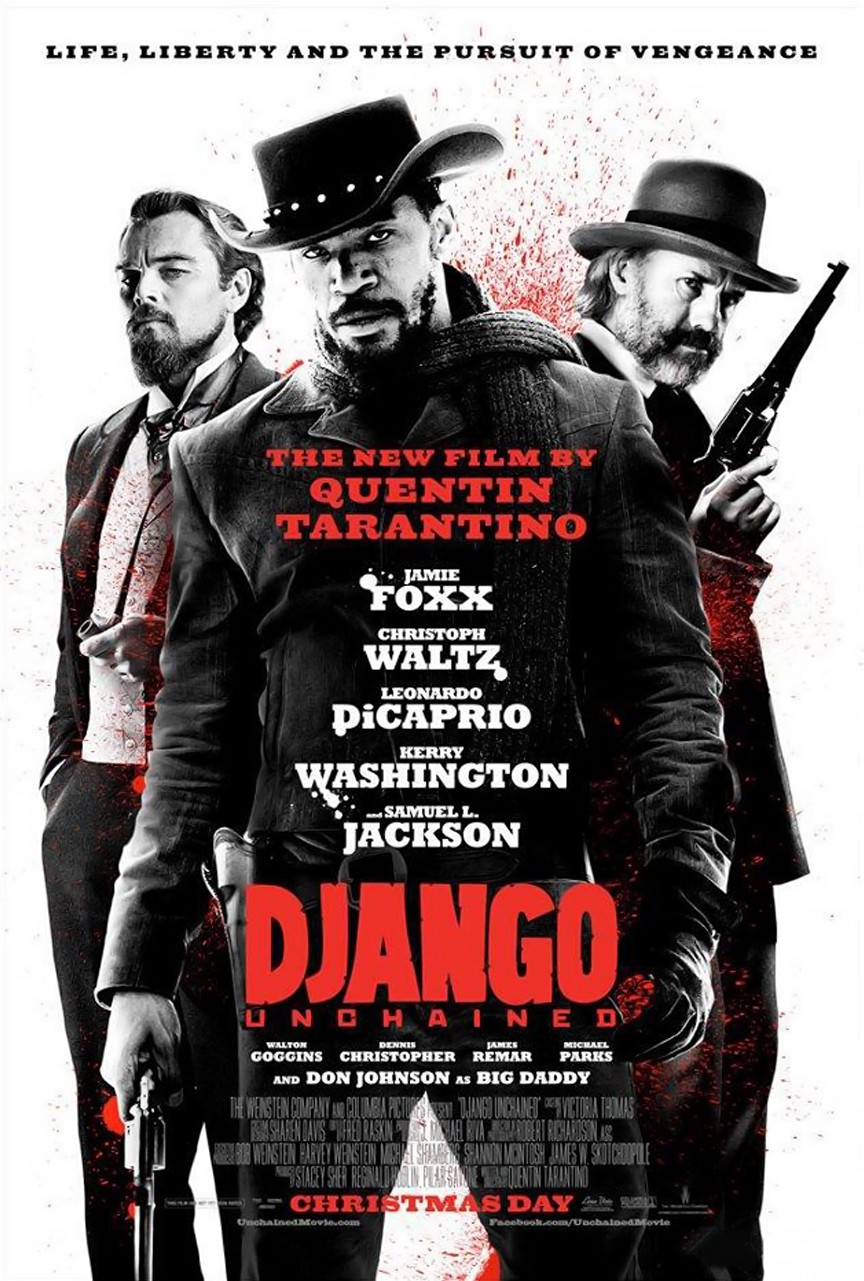
As an example, let's look at "Django Unchained," the last movie I reviewed. I took "Django Unchained" to task for having problems with tone, specifically the way it portrayed events that were horrific in content but lacked an correspondingly serious tone. My visceral reaction on seeing many of the scenes in this movie was to be horrified at the awful ways humans can treat one another; but the movie commanded me to feel a different range of emotions than the ones I was naturally inclined to feel. I think I was supposed to feel anger, humor, intrigue, satisfaction in vengeance--a range of emotions that was a tad inappropriate and simply not what I wanted to make of the material.
"Make it cool" is not an acceptable answer to the question "What's your take on slavery, Mr. Tarantino?"
The way I felt about what I was seeing struggled against how the movie wanted me to feel, and I ended up having to leave the theater for a bit and go sit in the bathroom to preserve my sense of agency. It was frustrating because I knew I was missing out on key plot points, and unlike a book, I couldn't just put a bookmark on a scene and come back when I had collected and organized my reactions.
On a related note, people who watch movies with me in the comfort of a living room or bedroom now know why I so frequently hit pause and get up to make tea, or read a book, or surf the web on my tablet. Agency. I preserve it.
I reiterate: I know this is a very weird way to feel about movies, and I'm not trying to make an argument against the medium because I'm not Holden Caufield in "Catcher in the Rye" (obscure literary reference for the win!). It's just that being in a movie theater sometimes makes me feel like Esther in "The Bell Jar," watching a terrible technicolor movie one evening in New York City and suddenly being able to guess the entire plot and ending, and hating how trite and contrived it all was while simultaneously being completely overwhelmed by it (second obscure literary reference for the win!).
If you're a regular reader of my blog, you're probably wondering how all this fits in with the fact that I saw "The Avengers" in a theater six times last summer.
I can feel you judging me.
In the case of "The Avengers," and the "Indiana Jones" franchise, and most Batman movies, and "Lord of the Rings," and any of the other fantasy/scifi movies that I love, I think the short answer is 'splosions. The long answer is scale. I don't mind being overwhelmed by movies that are about grandiose and unlikely things. I don't mean to say that I want stupid movies or movies about
uninteresting and predictable characters. The older I get, the less
patience I have for stupid bullshit, and fortunately the type of movies I
like have followed me to maturity--my friend R and I talked for over an hour
about the family relationships in "Thor" alone.
The further removed the movie is from my own life, frankly, the more I enjoy it. I guess the truth of the matter is that I like escapist movies. (Why I like the escape into superhero fantasies instead of action movies or romantic comedies where every man is a handsome architect and loves the soulful heroine
just the way she is while completely submitting to her efforts to change
him, well, that's a topic for another post.) I know I'm not alone in using movies to escape to better, more interesting worlds.
When they get out of their rocket, do they have to walk through puddles of moon-eye goo?
Escapism is what the most profitable wing of movie industry is based on. Most people spend their money on movies that get them outside of themselves and take them to other, more interesting worlds: fantasy kingdoms, spaceships, bygone eras, battlefields, and perfect worlds where everything happens for a reason and all your problems are solved by the end.
But then there are the other movies, the ones that challenge and discomfort and implicate. I want to like them. I want to say I enjoy a movie that makes me cry or cringe, that requires me to work at understanding it on its own terms, because I am both a deep, thoughtful person and an incredibly shallow person who wants others to think she's deep and thoughtful.
And yet, there I am in a bathroom at Cobble Hill Cinemas, hiding from the sight of Leonardo DiCaprio sawing a human skull in half, and wishing I was in the theater next door that was screening "The Hobbit" because I can hear the dwarves singing through the walls and it comforts me deeply.
Update on the heating situation: the heat came back on late Thursday night, as though the Internet read my cold and angry blog post and made magic things happen. One new tactic I learned for dealing with the no-heat situation though, is to boil water. My Tall Boss advised me to put a big pot of water to boil on the stove, said it would turn the place into "the lizard house" (which I really hope was just a reference to the climate reptiles need to survive, and not something I need to speak with my union rep about). And while the range on that heating technique wasn't fabulous, the area of the apartment around the stove did get quite toasty, if a bit moist. I put my bonsai there to perk it up.
That's all taken care of, so let's have a movie review!
I've seen "Django Unchained" twice now. It's good, let's start with that. It's very cool and entertaining, and it gives one an enormous sense of satisfaction to watch Jamie Foxx kill dozens of racists. But being cool is really all this movie has going for it, lacking the meta-texual commentary on the influence of movies on history that made Quentin Tarantino's previous historical fiction effort, "Inglourious Basterds," such a triumph.
I'm thinking it may have something to do with the subject matter. Tarantino is at his best when he's paying homage to various genres and
sub-genres of movies. He's an aficionado of pop-culture, and he has a
unique talent for turning conventions and tropes on their head and
making them feel fresh and original. The BF likes to say that Tarantino
is fluent in the language of film, "but keeps coming up with new shit" to say
(that's how he talks before morning coffee). The problem with "Django
Unchained" is he really doesn't have a lot to work with--Tarantino, I mean, not the BF. Much of this
movie plays like a spaghetti Western, which is, again, entertaining, but
also really highlights just how lacking cinema is when it comes to the depiction of slavery in America.
The portrayal of slavery in films and television has been--not sparse, exactly, but compared to the amount of material Tarantino was able to draw on for, say, his heist movie ("Reservoir Dogs") or his World War II movie ("Inglourious Basterds"), his slavery movie is drawing from a much smaller pool. There was "Roots" in 1977, "A Woman Called Moses" in 1978, "Glory" in 1989, "Amistad" in 1997, and "The
Boondocks" did an episode called "The Story of Catcher Freeman" in
their second season, which I throw on this list because "Django Unchained" feels more stylistically similar to that cartoon than the others. (Maybe you could throw "Gone With the Wind"in there, considering that it is the definitive work of art on the
antebellum South, but it's only about slavery if you're doing an
analysis of the evolution of African-American stereotypes in movies.)
An interesting side note of this train of thought: the lack of movies about slavery stands in sharp contrast to the amount of movies made about racism in America (in general) and the civil rights movement (in particular). "To Kill a Mockingbird" in 1962, "Guess Who's Coming to Dinner?" in 1967, "Blazing Saddles" in 1974, "King" in 1978, "Do the Right Thing" in 1989, "Malcolm X" in 1992, "Get on the Bus" in 1996, "The Great Debaters" in 2007, "The Help" in 2011. There was even a trailer for a new Jackie Robinson bio-pic before my second viewing of "Django Unchained."
This makes one ask oneself, Self, are filmmakers and audiences more accepting of willing to explore slavery's aftermath and legacy than slavery itself? Why?
It's weird, because I remember reading many, many works of fiction as a child written from the perspective of slaves. One of the American Girl series was about a slave, as were several Newbery books. These were considered age-appropriate and curriculum-approved, assigned to me by teachers who led class discussions on the topic. And I attended public school, so this was state- and federal-sanctioned material, given to fourth- and fifth-graders. We're okay with children encountering slavery in America through fiction. Why aren't we okay with adults encountering it through film? I don't know enough about the history of film to say anything conclusive about the situation. I just wanted to air some suspicions I've been developing since I started researching the other movies I referenced in this review.
Speaking of which, let's get back to the review of "Django Unchained." As I said, this movie owes a lot to spaghetti westerns. The BF pulled up the opening credits of Sergio Leone's "For a Few Dollars More" (1965).
Unfortunately, I don't have a video of the "Django Unchained" opening credits to put up here so you can compare them, but if you've seen the movie or are planning to see it, you'll get the homage to "For a Few Dollars More" right away. The music, the imagery and the font on the credits bear striking similarities.
But even though many parts of it, like the opening credits, feel so familiar and well-trodden in terms of film-making, "Django Unchained" still feels like its own, wholly original work of art. Tarantino may borrow extensively from the imagery, music and plot elements of other movies, but the familiarity of his tropes is actually what makes his movies feel fresh and new and unexpected (that, and the fact he's completely willing to kill off main characters seemingly on a whim).
That said, "Django Unchained" is not one of his best works. As far as revenge fantasies go, "Kill Bill" was more exciting and visually stimulating; and as far as historical fiction goes, "Inglourious Basterds" had more depth. The problem with this movie--besides the dearth of movies about slavery draw on, as I mentioned above--is that the subject matter isn't entirely suited to the Tarantino treatment. All those musical stings and that snappy dialog clashes with the visuals of slavery: the whippings, the chains, the branding irons, the dogs, no amount of ironic detachment can make that stuff "cool." And the more realistically the movie portrays slavery, the more horrific Tarantino's attempts to make it "cool" feel to the viewer.
Tarantino is actually pretty good at gore, and normally he knows when the audience needs video game violence ("Kill Bill: Volume 1" restaurant massacre, with the geysers of blood spraying from severed limbs) and when the audience needs real violence (Mr. Orange's gut wound in "Reservoir Dogs"). But he didn't do so well with the violence in "Django Unchained." I'm thinking specifically about a scene where a runaway slave is torn apart by dogs. There's other stuff happening in that scene: there's a hunchback who mumbles with such a thick Southern accent you can't understand him, which is meant to be funny; there's a woman dressed in men's clothing, a red scarf covering her from the eyes down, who is meant to be one of Tarantino's intriguing female badasses; but none of it makes a damn bit of difference because a powerless man is being torn apart by dogs for the amusement of slavers. The tone of the scene is at such odds with the context, and when your context is this bleak, you have to watch your tone much more carefully than Tarantino did in this and a few other scenes in "Django Unchained."
That's not to say this movie fails entirely as a revenge fantasy or even a completely un-subtle exploration of racism in America. I had hopes early on the movie that Tarantino was going to take "The Producers" route and make a full-on satire of "Gone With The Wind" or "Song Of The South," movies that idealize the antebellum south and play down the horrors of slavery.
Mel Brooks's stated purpose in life is to get revenge on Hitler for the Holocaust by making him look ridiculous, which is why we have "Springtime for Hitler" and "Hitler on Ice" (and are a richer world for them). There's a scene in "Django Unchained" where Tarantino does just that, but with slavers instead of Hitler.
Django and his partner are camped out in a hollow and a bunch of Ku Klux Klansmen ride in on horses to kill them. It's a very striking, grand scene: Wagner thunders on the soundtrack, white-hooded men sweep over the hill on white horses, waving torches and yelling, and it almost makes your heart swell like its the charge of the fucking Rohirrim in "Lord of the Rings: Return of the King." But then--oh, then, boys and girls--the Wagner cuts out, the movie jumps back about ten minutes in time, and all of the men about to go on the raid have an argument about how they can't see out of the eye-holes of their masks. And it is glorious. All those horrible human beings, perpetrating their heinous agenda because they visualize themselves as Nordic heroes of old, made objects of ridicule by their own jackassery.
Oh, and it felt good.
If only there were more of that in this movie. But alas, there is not. It's the first and last time Tarantino tapped his inner Mel Brooks for "Django Unchained," because Tarantino doesn't really do satire. He dealt with the discomfort and horror surrounding slavery by having a former slave kill a bunch of slavers. While that was, as I said at the beginning of this review, enormously satisfying, I liked the raid scene better than any other scene in this movie because it struck the right tone and inspired the right feelings in me. How do you break power of evil people hold over your mind and spirit? You laugh at them. You turn Hitler into a figure-skater and Klansmen into bumbling idiots who can't see out their eye holes. It worked in "Blazing Saddles" thirty years ago, and it could have worked in "Django Unchained" if Tarantino was a very different kind of film-maker.
He's not. What we got is a pretty good movie with a lot of flaws--and the all-time record for number of times the n-word was spoken in a single movie (109).
Final grade: C. It would have been a B, but if you read my book reviews, you know I deduct a letter grade for racism, and breaking the record for use of the n-word is simply not something to be proud of.